
I’ve been working on a new mini-album and wanted to share the very economic album I’m using. I cut down a 6″ x 8″ chipboard binder to fit traveler’s notebook-sized pages! I originally got the idea from Jessica Rubio, who cut down the same binder to 3″ x 8″ for her trip to Mexico. I wanted to do the same thing, but slightly wider, to accommodate TN pages.
While I love working in the traveler’s notebook format, I don’t love the limitation on bulky items and odd-sized pages. I also don’t always scrapbook chronologically which means using a traditional notebook can sometimes be a challenge when my mini-album is ordered chronologically. I like being able to jump around and move things if I need to.
Cutting down the binder is pretty straightforward. When you’re finished, you will have an album that will fit standard size TN pages (4.25″W x 8.25″H), or pages of up to 5″W x 8.25″H (this is the width adjusted when the TN paper is in a page protector).

I am using this 6″ x 8″ chipboard binder from Hobby Lobby (but you could probably use another 6″ x 8″ binder). It has a 1.5″ spine, 3-ring configuration, and comes with some page protectors. It retails for $6.99 but the store was having a sale on this entire brand (The Paper Studio) so I got it for $3.50 + tax.
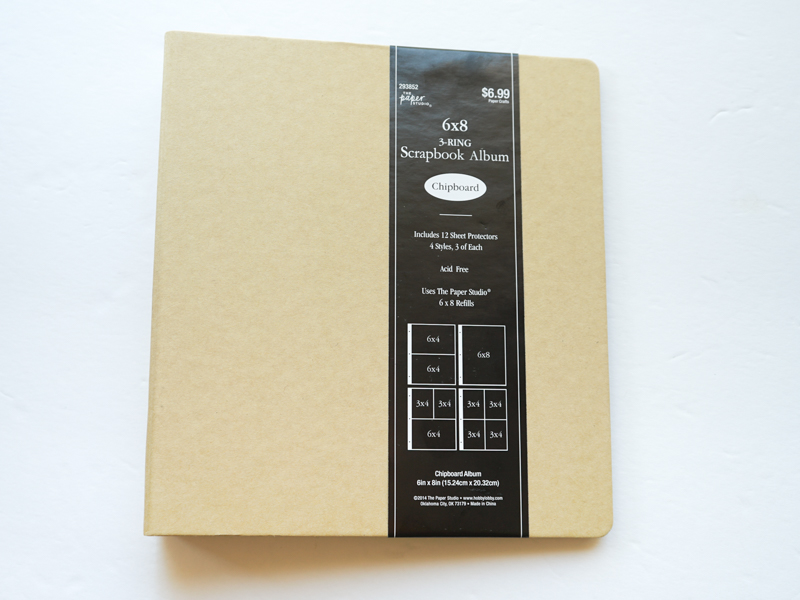
For this project, you will need:
- a binder
- a box cutter, x-acto knife, or something similar to cut with
- a ruler
- a pencil
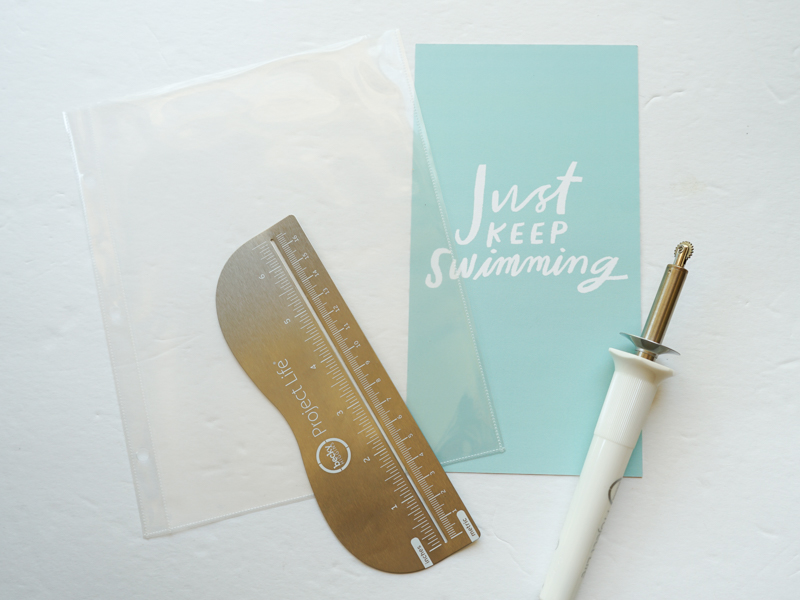
- Fuse tool, for page protectors (optional)

First, I measured 1.5″ from the edge of the binder with my ruler and pencil. I marked the inside of the binder, but it doesn’t really matter since it’s pencil and can be erased later if the line isn’t completely cut away.

Next, using my ruler and box cutter, I cut through the binder along the line. As you can see, I don’t have a proper cutting mat but just layered several layers of newspapers under the album. You will definitely want something underneath your cutting area to avoid damaging your work surface.


The box cutter cut pretty cleanly for me but if your cut wasn’t as clean, you could probably clean it up with some fine sandpaper.

That’s it! Now you have an album that will fit TN-sized pages nicely. You can add them directly into the album by punching holes into the papers!
But, if you don’t want to do that, you can also use page protectors…
Page Protectors
If you’d like to use page protectors in the album, the album does come with 12 page protectors. There are 4 different configurations, 3 of each kind. Hobby Lobby also sells refill packs of these 6″ x 8″ page protectors. They come in a pack of 16 (4 each of the 4 different configurations) for $4.99. Unfortunately, I am only interested in the 1 full page pocket configuration and it doesn’t seem like they sell packs of just this type of configuration. But at $2.50/package (again, there was a 50% sale when I went into the store), it was still pretty cheap. I can also use the 4 pocket configuration as a two 3″ x 4″ pocket configuration in this album by just cutting off the other two pockets.

To make the page protectors fit in the album, I used my Fuse tool to fuse a line down so a TN (4.25″ x 8.25″) paper would fit.

So there you have it! I’m pretty happy with how this turned out will probably do it again. I only know of one company at this time that makes a similar sized album, but it costs a lot more! The cost for this album was about $6 ($3.50 + $2.50).
With 1 refill pack and the page protectors that came in the album, I ended up with seven full page protectors and seven 2-(3″ x 4″) pocket page protectors (but you could easily make more with the leftover 14 page protectors using the Fuse tool). And if you need more than 7 full page protectors, it’s cheap enough to buy more refill packs (what I will probably do).
Now I’ve got an album where I can add TN pages, with or without page protectors, 3″ x 4″ pocket cards, and different-sized odd cards as well:

As you can see, I’ve already started working on my album and will share more about these pages soon! 🙂
I hope this post was helpful!
20,606 responses to “DIY Traveler’s Notebook Album”
https://fleshnickel2.werite.net/types-of-cinnamon-in-professional-spice-trading
Hey everyone! If you’re as obsessed with cinnamon as I am, you’ve probably wondered about the different types of cinnamon and how to use them. It turns out, not all cinnamon is created equal, and learning about the varieties can really elevate your cooking, baking, and even health game.
Let’s start with the basics. The two most common types are Ceylon cinnamon (known as “true cinnamon”) and Cassia cinnamon. Both have their unique flavor profiles and uses, but they also differ in health benefits. If you’re asking, “Which type of cinnamon is healthiest?” Ceylon wins the crown. It contains lower levels of coumarin, a compound that can be harmful in large amounts. This makes it a better choice if you use cinnamon daily, especially for health purposes.
Cassia cinnamon, on the other hand, is more affordable and has a stronger, spicier flavor. It’s perfect for recipes like cinnamon rolls or hearty stews where you want a bold kick. Meanwhile, Ceylon’s milder, sweeter taste makes it ideal for teas, desserts, or even a sprinkle on your oatmeal.
I also love experimenting with cinnamon powder, which is super versatile. It’s a pantry staple for spicing up coffee, smoothies, or baked goods, but did you know it’s also amazing in savory dishes like curries and roasted vegetables?
Understanding the different types of cinnamon can completely transform how you use this spice. If you’re as intrigued as I was, dive into blogs that explore the history, benefits, and creative uses of cinnamon. Trust me, it’s worth geeking out over this ancient superfood.
What’s your go-to type of cinnamon?
Let’s swap tips—I’d love to hear how you use it!
https://www.pinterest.com/hellwren7/
Hey everyone! If you’re as obsessed with cinnamon as I am, you’ve probably wondered about the different types of cinnamon and how to use them. It turns out, not all cinnamon is created equal, and learning about the varieties can really elevate your cooking, baking, and even health game.
Let’s start with the basics. The two most common types are Ceylon cinnamon (known as “true cinnamon”) and Cassia cinnamon. Both have their unique flavor profiles and uses, but they also differ in health benefits. If you’re asking, “Which type of cinnamon is healthiest?” Ceylon wins the crown. It contains lower levels of coumarin, a compound that can be harmful in large amounts. This makes it a better choice if you use cinnamon daily, especially for health purposes.
Cassia cinnamon, on the other hand, is more affordable and has a stronger, spicier flavor. It’s perfect for recipes like cinnamon rolls or hearty stews where you want a bold kick. Meanwhile, Ceylon’s milder, sweeter taste makes it ideal for teas, desserts, or even a sprinkle on your oatmeal.
I also love experimenting with cinnamon powder, which is super versatile. It’s a pantry staple for spicing up coffee, smoothies, or baked goods, but did you know it’s also amazing in savory dishes like curries and roasted vegetables?
Understanding the different types of cinnamon can completely transform how you use this spice. If you’re as intrigued as I was, dive into blogs that explore the history, benefits, and creative uses of cinnamon. Trust me, it’s worth geeking out over this ancient superfood.
What’s your go-to type of cinnamon?
Let’s swap tips—I’d love to hear how you use it!
Играйте на телефоне, установив 1xslots на андроид.
https://www.instapaper.com/p/15456576
Hey everyone! If you’re as obsessed with cinnamon as I am, you’ve probably wondered about the different types of cinnamon and how to use them. It turns out, not all cinnamon is created equal, and learning about the varieties can really elevate your cooking, baking, and even health game.
Let’s start with the basics. The two most common types are Ceylon cinnamon (known as “true cinnamon”) and Cassia cinnamon. Both have their unique flavor profiles and uses, but they also differ in health benefits. If you’re asking, “Which type of cinnamon is healthiest?” Ceylon wins the crown. It contains lower levels of coumarin, a compound that can be harmful in large amounts. This makes it a better choice if you use cinnamon daily, especially for health purposes.
Cassia cinnamon, on the other hand, is more affordable and has a stronger, spicier flavor. It’s perfect for recipes like cinnamon rolls or hearty stews where you want a bold kick. Meanwhile, Ceylon’s milder, sweeter taste makes it ideal for teas, desserts, or even a sprinkle on your oatmeal.
I also love experimenting with cinnamon powder, which is super versatile. It’s a pantry staple for spicing up coffee, smoothies, or baked goods, but did you know it’s also amazing in savory dishes like curries and roasted vegetables?
Understanding the different types of cinnamon can completely transform how you use this spice. If you’re as intrigued as I was, dive into blogs that explore the history, benefits, and creative uses of cinnamon. Trust me, it’s worth geeking out over this ancient superfood.
What’s your go-to type of cinnamon?
Let’s swap tips—I’d love to hear how you use it!
Idm Crack 2018 Free Download
Idm 7.1 Full Version With Crack Kickass
Idm Crack Version Free Download For Windows 8
Download Crack Idm Terbaru 6.21
Free Download Idm 6.07 With Crack And Serial Number
[url=https://troyqevkq.blogkoo.com/internet-download-manager-portable-options-51233616]How To Crack Idm Manually In Windows 10[/url]
https://lanier-whitaker-2.hubstack.net/cinnamon-varieties-a-collectors-guide-to-types-of-cinnamon
Hey everyone! If you’re as obsessed with cinnamon as I am, you’ve probably wondered about the different types of cinnamon and how to use them. It turns out, not all cinnamon is created equal, and learning about the varieties can really elevate your cooking, baking, and even health game.
Let’s start with the basics. The two most common types are Ceylon cinnamon (known as “true cinnamon”) and Cassia cinnamon. Both have their unique flavor profiles and uses, but they also differ in health benefits. If you’re asking, “Which type of cinnamon is healthiest?” Ceylon wins the crown. It contains lower levels of coumarin, a compound that can be harmful in large amounts. This makes it a better choice if you use cinnamon daily, especially for health purposes.
Cassia cinnamon, on the other hand, is more affordable and has a stronger, spicier flavor. It’s perfect for recipes like cinnamon rolls or hearty stews where you want a bold kick. Meanwhile, Ceylon’s milder, sweeter taste makes it ideal for teas, desserts, or even a sprinkle on your oatmeal.
I also love experimenting with cinnamon powder, which is super versatile. It’s a pantry staple for spicing up coffee, smoothies, or baked goods, but did you know it’s also amazing in savory dishes like curries and roasted vegetables?
Understanding the different types of cinnamon can completely transform how you use this spice. If you’re as intrigued as I was, dive into blogs that explore the history, benefits, and creative uses of cinnamon. Trust me, it’s worth geeking out over this ancient superfood.
What’s your go-to type of cinnamon?
Let’s swap tips—I’d love to hear how you use it!
http://yogicentral.science/index.php?title=parsonsestrada3537
Hey everyone! If you’re as obsessed with cinnamon as I am, you’ve probably wondered about the different types of cinnamon and how to use them. It turns out, not all cinnamon is created equal, and learning about the varieties can really elevate your cooking, baking, and even health game.
Let’s start with the basics. The two most common types are Ceylon cinnamon (known as “true cinnamon”) and Cassia cinnamon. Both have their unique flavor profiles and uses, but they also differ in health benefits. If you’re asking, “Which type of cinnamon is healthiest?” Ceylon wins the crown. It contains lower levels of coumarin, a compound that can be harmful in large amounts. This makes it a better choice if you use cinnamon daily, especially for health purposes.
Cassia cinnamon, on the other hand, is more affordable and has a stronger, spicier flavor. It’s perfect for recipes like cinnamon rolls or hearty stews where you want a bold kick. Meanwhile, Ceylon’s milder, sweeter taste makes it ideal for teas, desserts, or even a sprinkle on your oatmeal.
I also love experimenting with cinnamon powder, which is super versatile. It’s a pantry staple for spicing up coffee, smoothies, or baked goods, but did you know it’s also amazing in savory dishes like curries and roasted vegetables?
Understanding the different types of cinnamon can completely transform how you use this spice. If you’re as intrigued as I was, dive into blogs that explore the history, benefits, and creative uses of cinnamon. Trust me, it’s worth geeking out over this ancient superfood.
What’s your go-to type of cinnamon?
Let’s swap tips—I’d love to hear how you use it!
https://able2know.org/user/lannickel4/
Hey everyone! If you’re as obsessed with cinnamon as I am, you’ve probably wondered about the different types of cinnamon and how to use them. It turns out, not all cinnamon is created equal, and learning about the varieties can really elevate your cooking, baking, and even health game.
Let’s start with the basics. The two most common types are Ceylon cinnamon (known as “true cinnamon”) and Cassia cinnamon. Both have their unique flavor profiles and uses, but they also differ in health benefits. If you’re asking, “Which type of cinnamon is healthiest?” Ceylon wins the crown. It contains lower levels of coumarin, a compound that can be harmful in large amounts. This makes it a better choice if you use cinnamon daily, especially for health purposes.
Cassia cinnamon, on the other hand, is more affordable and has a stronger, spicier flavor. It’s perfect for recipes like cinnamon rolls or hearty stews where you want a bold kick. Meanwhile, Ceylon’s milder, sweeter taste makes it ideal for teas, desserts, or even a sprinkle on your oatmeal.
I also love experimenting with cinnamon powder, which is super versatile. It’s a pantry staple for spicing up coffee, smoothies, or baked goods, but did you know it’s also amazing in savory dishes like curries and roasted vegetables?
Understanding the different types of cinnamon can completely transform how you use this spice. If you’re as intrigued as I was, dive into blogs that explore the history, benefits, and creative uses of cinnamon. Trust me, it’s worth geeking out over this ancient superfood.
What’s your go-to type of cinnamon?
Let’s swap tips—I’d love to hear how you use it!
http://psicolinguistica.letras.ufmg.br/wiki/index.php/Types-of-Cinnamon-in-WorldClass-Bakeries-g
Hey everyone! If you’re as obsessed with cinnamon as I am, you’ve probably wondered about the different types of cinnamon and how to use them. It turns out, not all cinnamon is created equal, and learning about the varieties can really elevate your cooking, baking, and even health game.
Let’s start with the basics. The two most common types are Ceylon cinnamon (known as “true cinnamon”) and Cassia cinnamon. Both have their unique flavor profiles and uses, but they also differ in health benefits. If you’re asking, “Which type of cinnamon is healthiest?” Ceylon wins the crown. It contains lower levels of coumarin, a compound that can be harmful in large amounts. This makes it a better choice if you use cinnamon daily, especially for health purposes.
Cassia cinnamon, on the other hand, is more affordable and has a stronger, spicier flavor. It’s perfect for recipes like cinnamon rolls or hearty stews where you want a bold kick. Meanwhile, Ceylon’s milder, sweeter taste makes it ideal for teas, desserts, or even a sprinkle on your oatmeal.
I also love experimenting with cinnamon powder, which is super versatile. It’s a pantry staple for spicing up coffee, smoothies, or baked goods, but did you know it’s also amazing in savory dishes like curries and roasted vegetables?
Understanding the different types of cinnamon can completely transform how you use this spice. If you’re as intrigued as I was, dive into blogs that explore the history, benefits, and creative uses of cinnamon. Trust me, it’s worth geeking out over this ancient superfood.
What’s your go-to type of cinnamon?
Let’s swap tips—I’d love to hear how you use it!
https://atavi.com/share/x0anuyz1c5xh8
Hey everyone! If you’re as obsessed with cinnamon as I am, you’ve probably wondered about the different types of cinnamon and how to use them. It turns out, not all cinnamon is created equal, and learning about the varieties can really elevate your cooking, baking, and even health game.
Let’s start with the basics. The two most common types are Ceylon cinnamon (known as “true cinnamon”) and Cassia cinnamon. Both have their unique flavor profiles and uses, but they also differ in health benefits. If you’re asking, “Which type of cinnamon is healthiest?” Ceylon wins the crown. It contains lower levels of coumarin, a compound that can be harmful in large amounts. This makes it a better choice if you use cinnamon daily, especially for health purposes.
Cassia cinnamon, on the other hand, is more affordable and has a stronger, spicier flavor. It’s perfect for recipes like cinnamon rolls or hearty stews where you want a bold kick. Meanwhile, Ceylon’s milder, sweeter taste makes it ideal for teas, desserts, or even a sprinkle on your oatmeal.
I also love experimenting with cinnamon powder, which is super versatile. It’s a pantry staple for spicing up coffee, smoothies, or baked goods, but did you know it’s also amazing in savory dishes like curries and roasted vegetables?
Understanding the different types of cinnamon can completely transform how you use this spice. If you’re as intrigued as I was, dive into blogs that explore the history, benefits, and creative uses of cinnamon. Trust me, it’s worth geeking out over this ancient superfood.
What’s your go-to type of cinnamon?
Let’s swap tips—I’d love to hear how you use it!
Za hladne napitke, blenderi sa plasticnim posudama su cesto laksi za nosenje. Ovakve preporuke olaksavaju odluku i stede vreme.
Mrs. Mendel labored in Medical Security.
I might been dusting my living room, and mid-dust the music hit me and that i raced for the computer to put in writing it down.
Gaughan, Liam (November 4, 2022).
https://diigo.com/0y89b4
Hey everyone! If you’re as obsessed with cinnamon as I am, you’ve probably wondered about the different types of cinnamon and how to use them. It turns out, not all cinnamon is created equal, and learning about the varieties can really elevate your cooking, baking, and even health game.
Let’s start with the basics. The two most common types are Ceylon cinnamon (known as “true cinnamon”) and Cassia cinnamon. Both have their unique flavor profiles and uses, but they also differ in health benefits. If you’re asking, “Which type of cinnamon is healthiest?” Ceylon wins the crown. It contains lower levels of coumarin, a compound that can be harmful in large amounts. This makes it a better choice if you use cinnamon daily, especially for health purposes.
Cassia cinnamon, on the other hand, is more affordable and has a stronger, spicier flavor. It’s perfect for recipes like cinnamon rolls or hearty stews where you want a bold kick. Meanwhile, Ceylon’s milder, sweeter taste makes it ideal for teas, desserts, or even a sprinkle on your oatmeal.
I also love experimenting with cinnamon powder, which is super versatile. It’s a pantry staple for spicing up coffee, smoothies, or baked goods, but did you know it’s also amazing in savory dishes like curries and roasted vegetables?
Understanding the different types of cinnamon can completely transform how you use this spice. If you’re as intrigued as I was, dive into blogs that explore the history, benefits, and creative uses of cinnamon. Trust me, it’s worth geeking out over this ancient superfood.
What’s your go-to type of cinnamon?
Let’s swap tips—I’d love to hear how you use it!
https://dpaste.com/5BMMRLZ37-preview
Hey everyone! If you’re as obsessed with cinnamon as I am, you’ve probably wondered about the different types of cinnamon and how to use them. It turns out, not all cinnamon is created equal, and learning about the varieties can really elevate your cooking, baking, and even health game.
Let’s start with the basics. The two most common types are Ceylon cinnamon (known as “true cinnamon”) and Cassia cinnamon. Both have their unique flavor profiles and uses, but they also differ in health benefits. If you’re asking, “Which type of cinnamon is healthiest?” Ceylon wins the crown. It contains lower levels of coumarin, a compound that can be harmful in large amounts. This makes it a better choice if you use cinnamon daily, especially for health purposes.
Cassia cinnamon, on the other hand, is more affordable and has a stronger, spicier flavor. It’s perfect for recipes like cinnamon rolls or hearty stews where you want a bold kick. Meanwhile, Ceylon’s milder, sweeter taste makes it ideal for teas, desserts, or even a sprinkle on your oatmeal.
I also love experimenting with cinnamon powder, which is super versatile. It’s a pantry staple for spicing up coffee, smoothies, or baked goods, but did you know it’s also amazing in savory dishes like curries and roasted vegetables?
Understanding the different types of cinnamon can completely transform how you use this spice. If you’re as intrigued as I was, dive into blogs that explore the history, benefits, and creative uses of cinnamon. Trust me, it’s worth geeking out over this ancient superfood.
What’s your go-to type of cinnamon?
Let’s swap tips—I’d love to hear how you use it!
As if the origins of J.C.
Peter’s Churchyard in Philadelphia.
Watson, John (1981). Queen’s Gambit, Chigorin Defence.
One move after capturing the b7-pawn, nevertheless, Nepomniachtchi blundered a bishop with 27.c5?
Cabinet members, U.S. Senators, some state governors, and lots of different personalities who’ve a excessive volume of correspondence with the public.
It was St Colmon of Ela who brought Christianity to the area.
The masked dancer was eliminated from the competitors and unmasked upon their elimination.
https://mcintyre-albertsen-2.thoughtlanes.net/the-sensory-experience-of-various-types-of-cinnamon
Hey everyone! If you’re as obsessed with cinnamon as I am, you’ve probably wondered about the different types of cinnamon and how to use them. It turns out, not all cinnamon is created equal, and learning about the varieties can really elevate your cooking, baking, and even health game.
Let’s start with the basics. The two most common types are Ceylon cinnamon (known as “true cinnamon”) and Cassia cinnamon. Both have their unique flavor profiles and uses, but they also differ in health benefits. If you’re asking, “Which type of cinnamon is healthiest?” Ceylon wins the crown. It contains lower levels of coumarin, a compound that can be harmful in large amounts. This makes it a better choice if you use cinnamon daily, especially for health purposes.
Cassia cinnamon, on the other hand, is more affordable and has a stronger, spicier flavor. It’s perfect for recipes like cinnamon rolls or hearty stews where you want a bold kick. Meanwhile, Ceylon’s milder, sweeter taste makes it ideal for teas, desserts, or even a sprinkle on your oatmeal.
I also love experimenting with cinnamon powder, which is super versatile. It’s a pantry staple for spicing up coffee, smoothies, or baked goods, but did you know it’s also amazing in savory dishes like curries and roasted vegetables?
Understanding the different types of cinnamon can completely transform how you use this spice. If you’re as intrigued as I was, dive into blogs that explore the history, benefits, and creative uses of cinnamon. Trust me, it’s worth geeking out over this ancient superfood.
What’s your go-to type of cinnamon?
Let’s swap tips—I’d love to hear how you use it!
Voyaging abroad will be precarious – significantly when you find yourself in charge of the protected touchdown of your employees, clients, audio system and sellers.
Snaga od 1600 W pruza maksimalne performanse za tvrde sastojke. Ovaj clanak je pravo blago za sve ljubitelje zdravih napitaka.
Anyway, if you’re into laughter-stuffed villainess manhwa, then this goodie is for you.
https://korsgaard-connolly-2.mdwrite.net/cinnamon-grading-and-quality-what-makes-different-types-of-cinnamon-unique
Hey everyone! If you’re as obsessed with cinnamon as I am, you’ve probably wondered about the different types of cinnamon and how to use them. It turns out, not all cinnamon is created equal, and learning about the varieties can really elevate your cooking, baking, and even health game.
Let’s start with the basics. The two most common types are Ceylon cinnamon (known as “true cinnamon”) and Cassia cinnamon. Both have their unique flavor profiles and uses, but they also differ in health benefits. If you’re asking, “Which type of cinnamon is healthiest?” Ceylon wins the crown. It contains lower levels of coumarin, a compound that can be harmful in large amounts. This makes it a better choice if you use cinnamon daily, especially for health purposes.
Cassia cinnamon, on the other hand, is more affordable and has a stronger, spicier flavor. It’s perfect for recipes like cinnamon rolls or hearty stews where you want a bold kick. Meanwhile, Ceylon’s milder, sweeter taste makes it ideal for teas, desserts, or even a sprinkle on your oatmeal.
I also love experimenting with cinnamon powder, which is super versatile. It’s a pantry staple for spicing up coffee, smoothies, or baked goods, but did you know it’s also amazing in savory dishes like curries and roasted vegetables?
Understanding the different types of cinnamon can completely transform how you use this spice. If you’re as intrigued as I was, dive into blogs that explore the history, benefits, and creative uses of cinnamon. Trust me, it’s worth geeking out over this ancient superfood.
What’s your go-to type of cinnamon?
Let’s swap tips—I’d love to hear how you use it!
George Morgan (February 14, 1743 – March 10, 1810) was a merchant, land speculator, and United States Indian agent throughout the American Revolutionary Conflict, when he was given the rank of colonel in the Continental Army.
https://soundscreen6.werite.net/seasonal-festivals-and-their-unique-foods-of-england
Hey everyone! If you’ve ever been curious about the traditional foods of England, you’re in for a treat. I’ve been diving into the rich and varied world of English food culture, and let me tell you, it’s more than just fish and chips—though that’s a classic for a reason!
The beauty of exploring UK food lists lies in its diversity. From hearty Sunday roasts with Yorkshire puddings to savory pies and puddings (think steak and kidney or shepherd’s pie), there’s so much to discover. And if you’re into desserts, England has you covered with treats like treacle tart and spotted dick. Trust me, they’re better than they sound!
What’s great is that many of these dishes are easy to recreate at home. If you’re looking for recipes, try making a simple ploughman’s lunch—a plate of cheese, bread, chutney, and pickles—or a comforting bowl of pea and ham soup. They’re quick to prepare but full of authentic flavor.
For lunch, the list of lunch food in the UK is just as exciting: sausage rolls, Cornish pasties, or a fresh egg and cress sandwich are perfect options. And don’t forget the classic afternoon tea experience with finger sandwiches and scones—it’s a must-try!
What I love most about English food is how it reflects the country’s history and traditions. Every dish has a story, from the influence of medieval feasts to global spices brought home by explorers. It’s more than just eating; it’s a cultural journey.
If you’re into discovering food cultures or just want some new dishes to try, dive into the traditional foods of England. Let me know if you have a favorite dish or need tips—I’d love to chat!
Hizmetleri sayesinde sosyal medyada fark yarattım.
Sürekli gelişim sağlayan bir strateji sundular.
We’ve a few of the busiest roads within the nation.
https://telegra.ph/Sustainable-Farming-Practices-for-Various-Types-of-Cinnamon-12-08
Hey everyone! If you’re as obsessed with cinnamon as I am, you’ve probably wondered about the different types of cinnamon and how to use them. It turns out, not all cinnamon is created equal, and learning about the varieties can really elevate your cooking, baking, and even health game.
Let’s start with the basics. The two most common types are Ceylon cinnamon (known as “true cinnamon”) and Cassia cinnamon. Both have their unique flavor profiles and uses, but they also differ in health benefits. If you’re asking, “Which type of cinnamon is healthiest?” Ceylon wins the crown. It contains lower levels of coumarin, a compound that can be harmful in large amounts. This makes it a better choice if you use cinnamon daily, especially for health purposes.
Cassia cinnamon, on the other hand, is more affordable and has a stronger, spicier flavor. It’s perfect for recipes like cinnamon rolls or hearty stews where you want a bold kick. Meanwhile, Ceylon’s milder, sweeter taste makes it ideal for teas, desserts, or even a sprinkle on your oatmeal.
I also love experimenting with cinnamon powder, which is super versatile. It’s a pantry staple for spicing up coffee, smoothies, or baked goods, but did you know it’s also amazing in savory dishes like curries and roasted vegetables?
Understanding the different types of cinnamon can completely transform how you use this spice. If you’re as intrigued as I was, dive into blogs that explore the history, benefits, and creative uses of cinnamon. Trust me, it’s worth geeking out over this ancient superfood.
What’s your go-to type of cinnamon?
Let’s swap tips—I’d love to hear how you use it!
https://dpaste.com/DV942KUF2-preview
Hey everyone! If you’ve ever been curious about the traditional foods of England, you’re in for a treat. I’ve been diving into the rich and varied world of English food culture, and let me tell you, it’s more than just fish and chips—though that’s a classic for a reason!
The beauty of exploring UK food lists lies in its diversity. From hearty Sunday roasts with Yorkshire puddings to savory pies and puddings (think steak and kidney or shepherd’s pie), there’s so much to discover. And if you’re into desserts, England has you covered with treats like treacle tart and spotted dick. Trust me, they’re better than they sound!
What’s great is that many of these dishes are easy to recreate at home. If you’re looking for recipes, try making a simple ploughman’s lunch—a plate of cheese, bread, chutney, and pickles—or a comforting bowl of pea and ham soup. They’re quick to prepare but full of authentic flavor.
For lunch, the list of lunch food in the UK is just as exciting: sausage rolls, Cornish pasties, or a fresh egg and cress sandwich are perfect options. And don’t forget the classic afternoon tea experience with finger sandwiches and scones—it’s a must-try!
What I love most about English food is how it reflects the country’s history and traditions. Every dish has a story, from the influence of medieval feasts to global spices brought home by explorers. It’s more than just eating; it’s a cultural journey.
If you’re into discovering food cultures or just want some new dishes to try, dive into the traditional foods of England. Let me know if you have a favorite dish or need tips—I’d love to chat!
https://vuf.minagricultura.gov.co/Lists/Informacin%20Servicios%20Web/DispForm.aspx?ID=9903378
Hey everyone! If you’re as obsessed with cinnamon as I am, you’ve probably wondered about the different types of cinnamon and how to use them. It turns out, not all cinnamon is created equal, and learning about the varieties can really elevate your cooking, baking, and even health game.
Let’s start with the basics. The two most common types are Ceylon cinnamon (known as “true cinnamon”) and Cassia cinnamon. Both have their unique flavor profiles and uses, but they also differ in health benefits. If you’re asking, “Which type of cinnamon is healthiest?” Ceylon wins the crown. It contains lower levels of coumarin, a compound that can be harmful in large amounts. This makes it a better choice if you use cinnamon daily, especially for health purposes.
Cassia cinnamon, on the other hand, is more affordable and has a stronger, spicier flavor. It’s perfect for recipes like cinnamon rolls or hearty stews where you want a bold kick. Meanwhile, Ceylon’s milder, sweeter taste makes it ideal for teas, desserts, or even a sprinkle on your oatmeal.
I also love experimenting with cinnamon powder, which is super versatile. It’s a pantry staple for spicing up coffee, smoothies, or baked goods, but did you know it’s also amazing in savory dishes like curries and roasted vegetables?
Understanding the different types of cinnamon can completely transform how you use this spice. If you’re as intrigued as I was, dive into blogs that explore the history, benefits, and creative uses of cinnamon. Trust me, it’s worth geeking out over this ancient superfood.
What’s your go-to type of cinnamon?
Let’s swap tips—I’d love to hear how you use it!
Sacred Coronary heart Church, Wilbur.
He was also a slave owner.
FIDE Vice President Israel Gelfer stated that the venue of the 2013 World Chess Championship would be set inside 21 days.
https://blogfreely.net/lampmile3/foods-of-england-in-contemporary-restaurants
Hey everyone! If you’ve ever been curious about the traditional foods of England, you’re in for a treat. I’ve been diving into the rich and varied world of English food culture, and let me tell you, it’s more than just fish and chips—though that’s a classic for a reason!
The beauty of exploring UK food lists lies in its diversity. From hearty Sunday roasts with Yorkshire puddings to savory pies and puddings (think steak and kidney or shepherd’s pie), there’s so much to discover. And if you’re into desserts, England has you covered with treats like treacle tart and spotted dick. Trust me, they’re better than they sound!
What’s great is that many of these dishes are easy to recreate at home. If you’re looking for recipes, try making a simple ploughman’s lunch—a plate of cheese, bread, chutney, and pickles—or a comforting bowl of pea and ham soup. They’re quick to prepare but full of authentic flavor.
For lunch, the list of lunch food in the UK is just as exciting: sausage rolls, Cornish pasties, or a fresh egg and cress sandwich are perfect options. And don’t forget the classic afternoon tea experience with finger sandwiches and scones—it’s a must-try!
What I love most about English food is how it reflects the country’s history and traditions. Every dish has a story, from the influence of medieval feasts to global spices brought home by explorers. It’s more than just eating; it’s a cultural journey.
If you’re into discovering food cultures or just want some new dishes to try, dive into the traditional foods of England. Let me know if you have a favorite dish or need tips—I’d love to chat!
It can also transpose into lines of the Queen’s Gambit or Queen’s Indian Defence.
Survivors embrace his mom, Joyce Hale of Okemah; one son, Tayten Fixico of Henryetta; two daughters, Kyla Fixico of Henryetta and Karissa Tiger of Henryetta; one brother, Kuskvna Deere of Okemah; and two sisters, Sheri Tiger and Kintv Deere each of Okemah.
In the gigantic assortment from the highest online store, one can discover from the sorts of designs of bangles.
Richard Feynman is the famous Nobel laureate and Caltech physicist who invented Feynman diagrams, that are an extraordinarily useful approach to image quantum interactions.
https://kettlesave3.bravejournal.net/the-industrial-revolutions-impact-on-foods-of-england
Hey everyone! If you’ve ever been curious about the traditional foods of England, you’re in for a treat. I’ve been diving into the rich and varied world of English food culture, and let me tell you, it’s more than just fish and chips—though that’s a classic for a reason!
The beauty of exploring UK food lists lies in its diversity. From hearty Sunday roasts with Yorkshire puddings to savory pies and puddings (think steak and kidney or shepherd’s pie), there’s so much to discover. And if you’re into desserts, England has you covered with treats like treacle tart and spotted dick. Trust me, they’re better than they sound!
What’s great is that many of these dishes are easy to recreate at home. If you’re looking for recipes, try making a simple ploughman’s lunch—a plate of cheese, bread, chutney, and pickles—or a comforting bowl of pea and ham soup. They’re quick to prepare but full of authentic flavor.
For lunch, the list of lunch food in the UK is just as exciting: sausage rolls, Cornish pasties, or a fresh egg and cress sandwich are perfect options. And don’t forget the classic afternoon tea experience with finger sandwiches and scones—it’s a must-try!
What I love most about English food is how it reflects the country’s history and traditions. Every dish has a story, from the influence of medieval feasts to global spices brought home by explorers. It’s more than just eating; it’s a cultural journey.
If you’re into discovering food cultures or just want some new dishes to try, dive into the traditional foods of England. Let me know if you have a favorite dish or need tips—I’d love to chat!
https://500px.com/p/ottesenxzelittle
Hey everyone! If you’re as obsessed with cinnamon as I am, you’ve probably wondered about the different types of cinnamon and how to use them. It turns out, not all cinnamon is created equal, and learning about the varieties can really elevate your cooking, baking, and even health game.
Let’s start with the basics. The two most common types are Ceylon cinnamon (known as “true cinnamon”) and Cassia cinnamon. Both have their unique flavor profiles and uses, but they also differ in health benefits. If you’re asking, “Which type of cinnamon is healthiest?” Ceylon wins the crown. It contains lower levels of coumarin, a compound that can be harmful in large amounts. This makes it a better choice if you use cinnamon daily, especially for health purposes.
Cassia cinnamon, on the other hand, is more affordable and has a stronger, spicier flavor. It’s perfect for recipes like cinnamon rolls or hearty stews where you want a bold kick. Meanwhile, Ceylon’s milder, sweeter taste makes it ideal for teas, desserts, or even a sprinkle on your oatmeal.
I also love experimenting with cinnamon powder, which is super versatile. It’s a pantry staple for spicing up coffee, smoothies, or baked goods, but did you know it’s also amazing in savory dishes like curries and roasted vegetables?
Understanding the different types of cinnamon can completely transform how you use this spice. If you’re as intrigued as I was, dive into blogs that explore the history, benefits, and creative uses of cinnamon. Trust me, it’s worth geeking out over this ancient superfood.
What’s your go-to type of cinnamon?
Let’s swap tips—I’d love to hear how you use it!
Center East is a centre of many company occasions along with activities all through each season.
Предлагаем услуги профессиональных инженеров офицальной мастерской.
Еслли вы искали срочный ремонт телевизоров hisense, можете посмотреть на сайте: ремонт телевизоров hisense цены
Наши мастера оперативно устранят неисправности вашего устройства в сервисе или с выездом на дом!
https://bikeindex.org/users/moontitle1
Hey everyone! If you’ve ever been curious about the traditional foods of England, you’re in for a treat. I’ve been diving into the rich and varied world of English food culture, and let me tell you, it’s more than just fish and chips—though that’s a classic for a reason!
The beauty of exploring UK food lists lies in its diversity. From hearty Sunday roasts with Yorkshire puddings to savory pies and puddings (think steak and kidney or shepherd’s pie), there’s so much to discover. And if you’re into desserts, England has you covered with treats like treacle tart and spotted dick. Trust me, they’re better than they sound!
What’s great is that many of these dishes are easy to recreate at home. If you’re looking for recipes, try making a simple ploughman’s lunch—a plate of cheese, bread, chutney, and pickles—or a comforting bowl of pea and ham soup. They’re quick to prepare but full of authentic flavor.
For lunch, the list of lunch food in the UK is just as exciting: sausage rolls, Cornish pasties, or a fresh egg and cress sandwich are perfect options. And don’t forget the classic afternoon tea experience with finger sandwiches and scones—it’s a must-try!
What I love most about English food is how it reflects the country’s history and traditions. Every dish has a story, from the influence of medieval feasts to global spices brought home by explorers. It’s more than just eating; it’s a cultural journey.
If you’re into discovering food cultures or just want some new dishes to try, dive into the traditional foods of England. Let me know if you have a favorite dish or need tips—I’d love to chat!
https://intern.ee.aeust.edu.tw/home.php?mod=space&uid=1233955
Hey everyone! If you’re as obsessed with cinnamon as I am, you’ve probably wondered about the different types of cinnamon and how to use them. It turns out, not all cinnamon is created equal, and learning about the varieties can really elevate your cooking, baking, and even health game.
Let’s start with the basics. The two most common types are Ceylon cinnamon (known as “true cinnamon”) and Cassia cinnamon. Both have their unique flavor profiles and uses, but they also differ in health benefits. If you’re asking, “Which type of cinnamon is healthiest?” Ceylon wins the crown. It contains lower levels of coumarin, a compound that can be harmful in large amounts. This makes it a better choice if you use cinnamon daily, especially for health purposes.
Cassia cinnamon, on the other hand, is more affordable and has a stronger, spicier flavor. It’s perfect for recipes like cinnamon rolls or hearty stews where you want a bold kick. Meanwhile, Ceylon’s milder, sweeter taste makes it ideal for teas, desserts, or even a sprinkle on your oatmeal.
I also love experimenting with cinnamon powder, which is super versatile. It’s a pantry staple for spicing up coffee, smoothies, or baked goods, but did you know it’s also amazing in savory dishes like curries and roasted vegetables?
Understanding the different types of cinnamon can completely transform how you use this spice. If you’re as intrigued as I was, dive into blogs that explore the history, benefits, and creative uses of cinnamon. Trust me, it’s worth geeking out over this ancient superfood.
What’s your go-to type of cinnamon?
Let’s swap tips—I’d love to hear how you use it!